Quick Weight Loss Medication Without Surgery
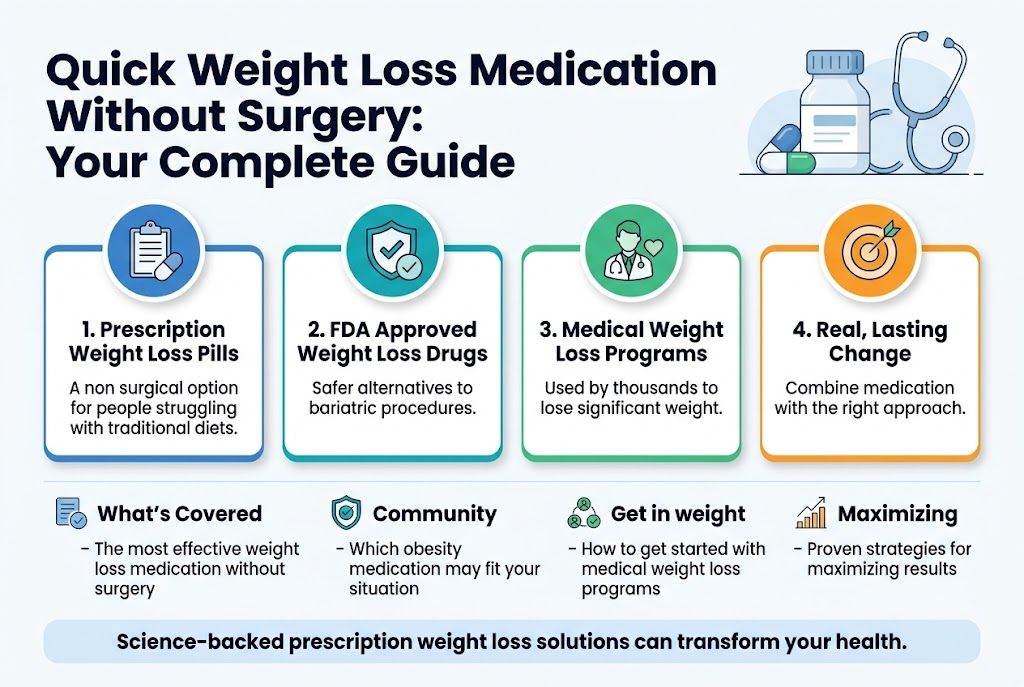
Quick Weight Loss Medication Without Surgery: Your Complete Guide
If you’re struggling with weight loss and want to avoid surgery, prescription weight loss pills might be the answer you’ve been looking for. This guide is for anyone who’s tried traditional diets without lasting success and is curious about FDA approved weight loss drugs as a safer alternative to bariatric procedures.
Medical weight loss programs have helped thousands of people lose significant weight using non surgical weight loss methods that actually work. These prescription diet pills aren’t magic bullets, but when combined with the right approach, they can make the difference between another failed diet and real, lasting change.
We’ll walk you through the most effective weight loss medication without surgery options currently available, including which obesity medication might work best for your specific situation. You’ll also learn how to get started with medical weight loss programs and discover proven strategies for maximizing your results with these powerful weight management medications.
Ready to explore non invasive weight loss treatment options that could transform your health? Let’s dive into what science-backed prescription weight loss solutions can do for you.
Understanding FDA-Approved Weight Loss Medications
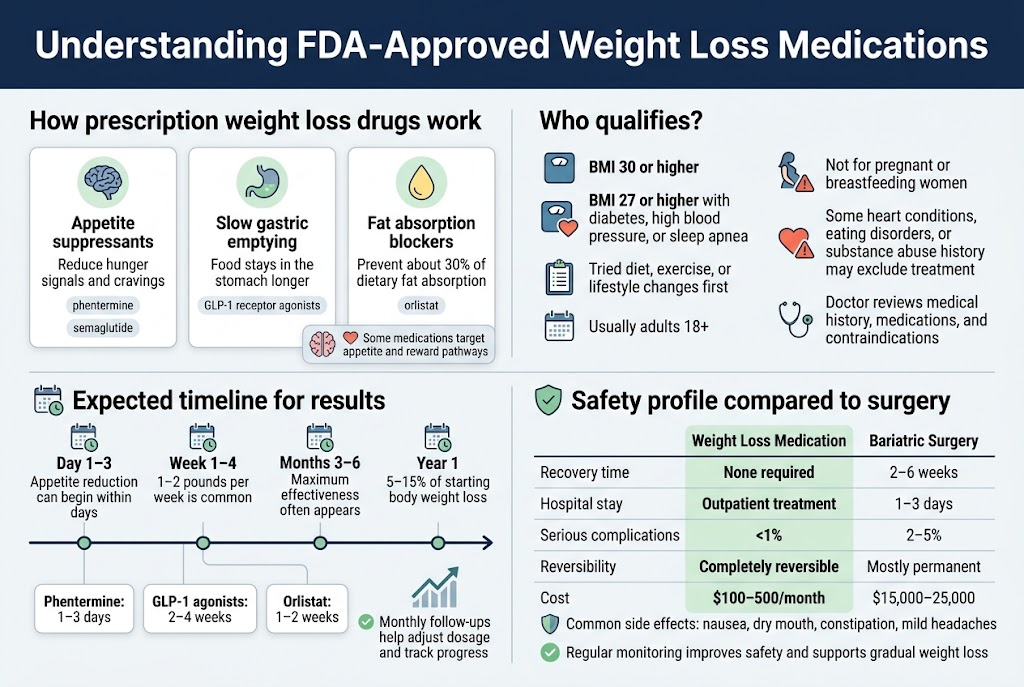
How prescription weight loss drugs work in your body
Prescription weight loss medications target different biological pathways to help you lose weight effectively. Most FDA approved weight loss drugs work by either suppressing your appetite, blocking fat absorption, or affecting how your brain processes hunger signals.
Appetite suppressants like phentermine and semaglutide (Ozempic, Wegovy) influence neurotransmitters in your brain that control hunger and satiety. These weight loss medications make you feel full faster and reduce cravings between meals. GLP-1 receptor agonists slow gastric emptying, meaning food stays in your stomach longer, keeping you satisfied.
Fat absorption blockers like orlistat prevent your body from absorbing about 30% of dietary fats. Instead of being stored as body fat, these fats pass through your digestive system. Some newer obesity medications combine multiple mechanisms – for example, naltrexone-bupropion affects both appetite and reward pathways in your brain.
The key difference between prescription diet pills and over-the-counter supplements is potency and clinical validation. These medical weight loss programs use medications that have undergone rigorous testing to prove their effectiveness and safety profile.
Eligibility requirements for medical weight loss treatment
Getting prescribed weight loss medication isn’t as simple as asking your doctor. The FDA has established specific criteria that patients must meet before starting any prescription weight loss treatment.
You’ll typically qualify for weight loss medication without surgery if your BMI is 30 or higher, or 27 or higher with weight-related health conditions like diabetes, high blood pressure, or sleep apnea. Your doctor will also evaluate your medical history, current medications, and any contraindications.
Most healthcare providers require evidence that you’ve tried traditional weight loss methods first – diet changes, exercise programs, or lifestyle modifications. They want to see that non surgical weight loss approaches haven’t been successful on their own.
Age restrictions apply to many weight management medications. Most are approved for adults 18 and older, though some newer drugs have expanded age ranges. Pregnant or breastfeeding women cannot use these medications, and people with certain heart conditions, eating disorders, or substance abuse history may be excluded.
Your doctor will also consider your commitment level. Successful medical weight loss programs require regular follow-ups, lifestyle changes, and adherence to the medication schedule.
Expected timeline for seeing results
Weight loss medication results vary significantly between individuals, but most people start seeing changes within the first month of treatment. Initial results often include reduced appetite and fewer cravings, which can happen within days of starting the medication.
For measurable weight loss, expect to see 1-2 pounds per week during the first few months. Most prescription weight loss pills show their maximum effectiveness between 3-6 months of consistent use. Studies show that people using FDA approved weight loss drugs typically lose 5-15% of their starting body weight within the first year.
The timeline looks different for various medications:
-
Phentermine: Initial appetite suppression within 1-3 days, weight loss visible in 2-4 weeks
-
GLP-1 agonists: Gradual appetite reduction over 2-4 weeks, steady weight loss over months
-
Orlistat: Results appear within 1-2 weeks as dietary fat absorption decreases
Your progress depends on several factors including starting weight, adherence to the medication schedule, dietary changes, exercise routine, and individual metabolism. People who combine weight loss medication with structured eating plans and regular physical activity see faster and more sustained results.
Regular monitoring during medical weight loss programs helps track progress and adjust dosages when needed. Most doctors schedule monthly check-ins during the first few months to optimize your treatment plan.
Safety profile compared to surgical alternatives
Non surgical weight loss treatments offer a significantly safer profile compared to bariatric surgery procedures. While weight loss surgery carries risks like infection, bleeding, and long-term complications, prescription weight loss medication side effects are generally mild and manageable.
Common side effects of weight loss medication include nausea, dry mouth, constipation, and mild headaches. These typically decrease as your body adjusts to the medication. Serious adverse events are rare when medications are properly prescribed and monitored.
| Aspect | Weight Loss Medication | Bariatric Surgery |
|---|---|---|
| Recovery time | None required | 2-6 weeks |
| Hospital stay | Outpatient treatment | 1-3 days |
| Serious complications | <1% | 2-5% |
| Reversibility | Completely reversible | Mostly permanent |
| Cost | $100-500/month | $15,000-25,000 |
The non invasive weight loss treatment approach means you can stop the medication anytime without permanent changes to your anatomy. This flexibility allows for treatment adjustments based on your response and life circumstances.
Prescription diet pills also allow for gradual weight loss, which is easier on your body systems compared to the rapid weight loss following surgery. Your skin, metabolism, and digestive system can adapt more naturally to the changes.
Regular monitoring in medical weight loss programs ensures any potential side effects are caught early and addressed promptly. Most healthcare providers require blood work and vital sign checks to maintain the highest safety standards throughout your weight management medication journey.
Most Effective Non-Surgical Weight Loss Medications
GLP-1 Receptor Agonists for Appetite Suppression
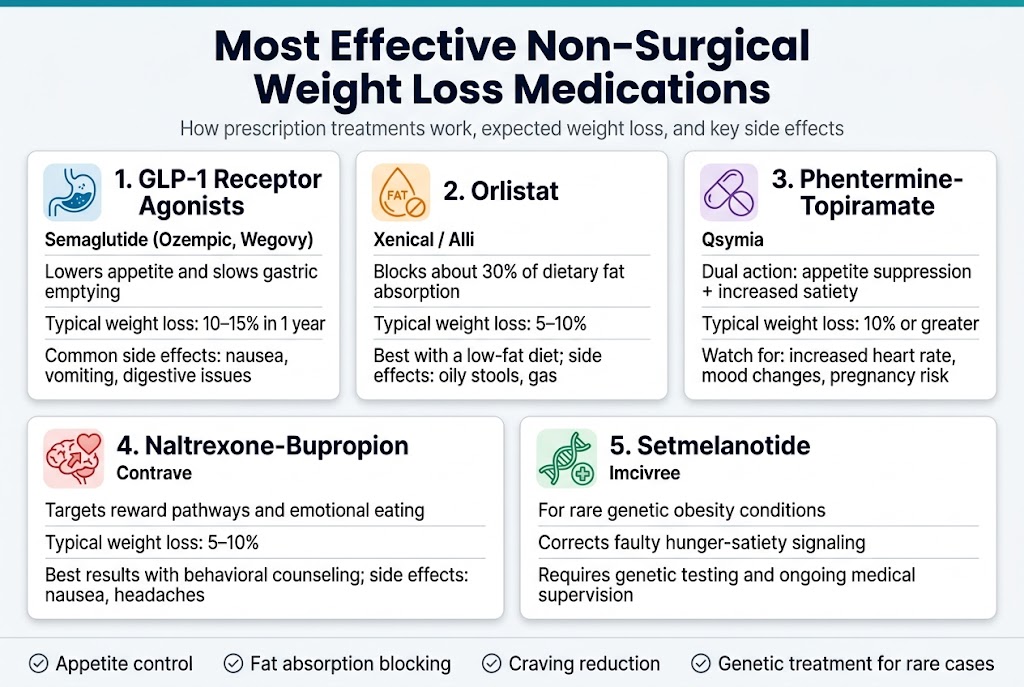
GLP-1 receptor agonists have transformed the landscape of weight loss medication by mimicking hormones your body naturally produces to regulate blood sugar and appetite. These prescription weight loss pills include semaglutide (Ozempic, Wegovy) and liraglutide (Saxenda), which work by slowing gastric emptying and sending satiety signals to your brain.
These medications can lead to significant weight reduction, with many patients losing 10-15% of their body weight within the first year. The weekly injections help control cravings and reduce portion sizes naturally, making it easier to stick to healthier eating patterns. Side effects typically include nausea, vomiting, and digestive issues, especially during the initial weeks of treatment.
Orlistat for Fat Absorption Blocking
Orlistat stands out among FDA approved weight loss drugs because it works directly in your digestive system rather than affecting brain chemistry. This obesity medication blocks about 30% of dietary fat absorption, preventing calories from entering your bloodstream.
Available both by prescription (Xenical) and over-the-counter (Alli), orlistat requires commitment to a low-fat diet to minimize uncomfortable side effects like oily stools and gas. When combined with proper nutrition and exercise, patients typically lose 5-10% of their starting weight. The medication works best for people who can maintain a diet containing less than 30% of calories from fat.
Phentermine-Topiramate Combinations for Dual Action
The combination of phentermine and topiramate (Qsymia) represents a powerful approach to prescription diet pills that addresses multiple pathways to weight loss. Phentermine suppresses appetite through neurotransmitter regulation, while topiramate enhances satiety and may increase energy expenditure.
This dual-action weight management medication can produce substantial results, with many patients achieving 10% or greater weight loss. The extended-release formulation provides all-day appetite control, reducing the likelihood of evening overeating. However, this combination requires careful monitoring due to potential side effects including increased heart rate, mood changes, and birth defects if taken during pregnancy.
Naltrexone-Bupropion for Craving Control
Naltrexone-bupropion (Contrave) targets the brain’s reward pathways that drive food cravings and emotional eating. This non surgical weight loss option combines an opioid receptor antagonist with an antidepressant to reduce food motivation and increase energy expenditure.
Particularly effective for people who struggle with food addiction or emotional eating patterns, this medication helps break the cycle of craving-driven overeating. Weight loss typically ranges from 5-10% of starting weight, with the best results occurring when combined with behavioral counseling. The gradual dose escalation helps minimize side effects like nausea and headaches.
Setmelanotide for Rare Genetic Obesity Conditions
Setmelanotide (Imcivree) represents a breakthrough in treating genetic forms of obesity, specifically targeting melanocortin-4 receptor pathway deficiencies. This specialized weight loss medication without surgery addresses the underlying genetic causes of severe obesity in patients with specific rare conditions.
Unlike other weight loss medications, setmelanotide directly corrects faulty genetic signaling related to hunger and satiety. For qualified patients with genetic obesity syndromes, this non invasive weight loss treatment can produce dramatic results that were previously impossible to achieve through conventional methods. The medication requires genetic testing to confirm eligibility and ongoing medical supervision.
Benefits of Choosing Medication Over Surgery
Avoid surgical risks and complications
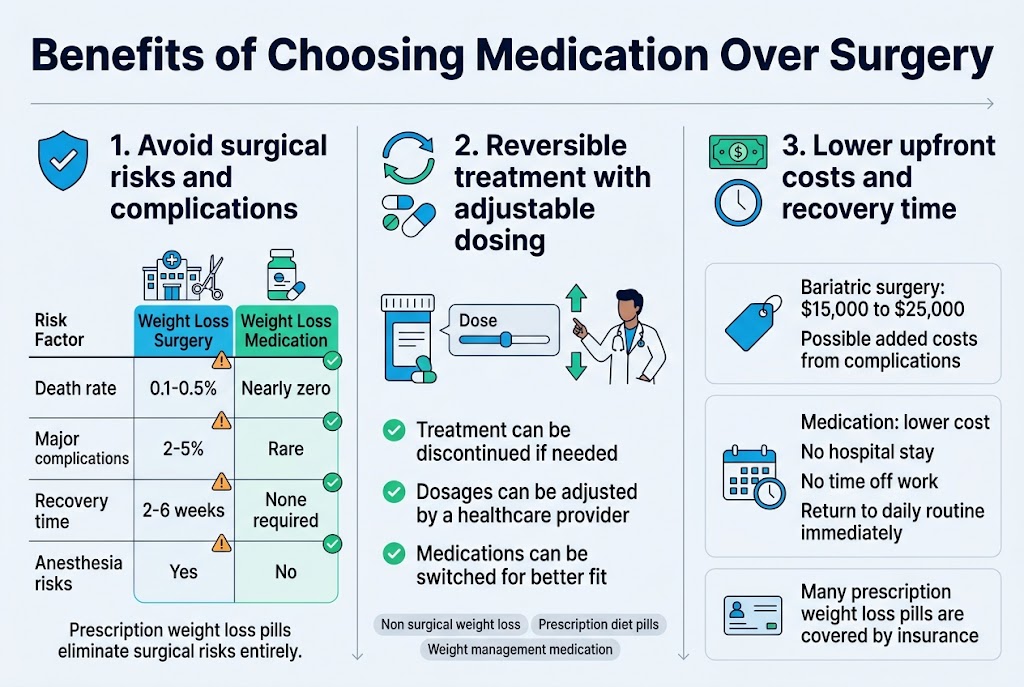
Weight loss medication offers a much safer path compared to surgical procedures like gastric bypass or sleeve gastrectomy. Bariatric surgery carries inherent risks including bleeding, infection, blood clots, and even life-threatening complications during or after the procedure. Some patients experience long-term issues such as nutritional deficiencies, dumping syndrome, or bowel obstructions that require additional medical interventions.
Prescription weight loss pills eliminate these surgical risks entirely. When you choose FDA approved weight loss drugs, you’re avoiding anesthesia complications, surgical site infections, and the rare but serious possibility of surgical mortality. The safety profile of approved obesity medication has been extensively studied, with side effects typically being mild and manageable compared to potential surgical complications.
| Risk Factor | Weight Loss Surgery | Weight Loss Medication |
|---|---|---|
| Death rate | 0.1-0.5% | Nearly zero |
| Major complications | 2-5% | Rare |
| Recovery time | 2-6 weeks | None required |
| Anesthesia risks | Yes | No |
Reversible treatment with adjustable dosing
One of the biggest advantages of non surgical weight loss approaches is their reversible nature. Unlike bariatric surgery, which permanently alters your digestive system, prescription diet pills can be discontinued if they don’t work well for you or if you experience unwanted effects.
Medical weight loss programs allow healthcare providers to fine-tune your treatment by adjusting dosages or switching between different medications. If Orlistat causes digestive issues, your doctor might switch you to Phentermine or one of the newer GLP-1 agonists. This flexibility means you can find the right fit for your body and lifestyle without being locked into irreversible changes.
The dosing flexibility also means your treatment can evolve with your progress. As you lose weight, your doctor might reduce the dosage or modify your weight management medication regimen. This personalized approach helps maintain effectiveness while minimizing side effects throughout your weight loss journey.
Lower upfront costs and recovery time
Non invasive weight loss treatment through medication presents significant financial advantages over surgical options. Bariatric surgery typically costs between $15,000 to $25,000, not including potential complications or follow-up procedures. Even with insurance coverage, out-of-pocket expenses can reach thousands of dollars.
Weight loss medications cost significantly less, especially when you factor in the absence of hospital stays, surgical fees, and extended recovery periods. Many prescription weight loss pills are now covered by insurance plans, making them even more accessible to patients seeking effective weight management solutions.
The recovery advantage is equally compelling. Surgical patients often need 2-6 weeks off work, during which they face dietary restrictions, pain management, and gradual return to normal activities. With weight loss medication without surgery, you can continue your normal routine immediately. There’s no surgical recovery period, no time off work, and no disruption to your daily life while you begin losing weight.
Getting Started With Medical Weight Loss Programs
Finding Qualified Healthcare Providers
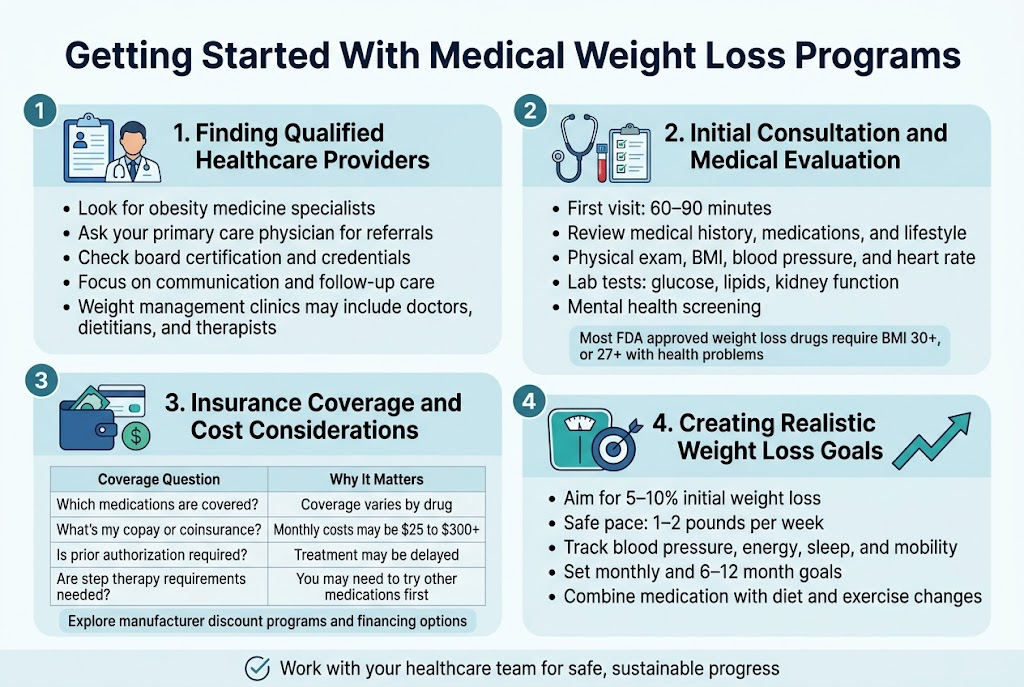
Choosing the right doctor makes all the difference when you’re starting a medical weight loss program. You’ll want to look for physicians who specialize in obesity medicine or have extensive experience prescribing weight loss medication. Board-certified obesity medicine specialists understand the complexities of weight management and stay current with the latest FDA approved weight loss drugs.
Start by asking your primary care physician for referrals to specialists in your area. Many family doctors also prescribe prescription weight loss pills, but if your situation is complex, a specialist might be better equipped to help. Weight management clinics often house multiple specialists under one roof, including doctors, dietitians, and behavioral therapists.
Check credentials carefully. Look for doctors certified by the American Board of Obesity Medicine or those with additional training in weight management medication. Read online reviews, but focus on feedback about the doctor’s communication style and follow-up care rather than just weight loss results, since individual outcomes vary significantly.
Initial Consultation and Medical Evaluation Process
Your first appointment will involve a comprehensive health assessment. Expect to spend 60-90 minutes discussing your medical history, previous weight loss attempts, current medications, and lifestyle factors. The doctor will calculate your BMI and may order blood tests to check for diabetes, thyroid issues, and other conditions that affect weight.
The evaluation typically includes:
-
Complete physical examination
-
Blood pressure and heart rate monitoring
-
Laboratory tests (lipid panel, glucose levels, kidney function)
-
Review of family medical history
-
Assessment of eating patterns and physical activity
-
Mental health screening
Your doctor will determine if you’re a good candidate for prescription diet pills based on your BMI, health conditions, and weight loss goals. Most FDA approved weight loss drugs require a BMI of 30 or higher, or 27 with weight-related health problems like diabetes or high blood pressure.
Insurance Coverage and Cost Considerations
Insurance coverage for weight loss medication varies dramatically between plans. Many insurers still consider obesity medications cosmetic rather than medical necessity, despite obesity being recognized as a chronic disease. Contact your insurance company directly to understand your specific coverage before your appointment.
Here’s what you should ask your insurance provider:
| Coverage Question | Why It Matters |
|---|---|
| Which weight loss medications are covered? | Different drugs have different coverage levels |
| What’s my copay or coinsurance? | Monthly costs can range from $25 to $300+ |
| Is prior authorization required? | This process can delay treatment start |
| Are there step therapy requirements? | You might need to try certain medications first |
If insurance doesn’t cover your medication, explore manufacturer discount programs. Many pharmaceutical companies offer patient assistance programs that can reduce costs significantly. Some medical weight loss programs also offer financing options or sliding fee scales based on income.
Creating Realistic Weight Loss Goals
Setting achievable targets prevents disappointment and helps maintain long-term motivation. Your healthcare provider will help establish goals based on your starting weight, health conditions, and lifestyle factors. Most doctors recommend aiming for 5-10% weight loss initially, which may seem modest but delivers significant health benefits.
Break your overall goal into smaller milestones. Losing 1-2 pounds per week is considered safe and sustainable. Non surgical weight loss with medication typically results in 5-15% total body weight reduction over 12 months, though results vary widely between individuals.
Your goals should extend beyond the scale. Consider improvements in:
-
Blood pressure and cholesterol levels
-
Energy levels and sleep quality
-
Mobility and joint pain
-
Medication requirements for diabetes or other conditions
-
Overall quality of life
Work with your healthcare team to establish both short-term (monthly) and long-term (6-12 month) objectives. Regular check-ins allow for goal adjustments based on your progress and any side effects you experience. Remember that weight management medication works best when combined with lifestyle changes, so your goals should include dietary and exercise components alongside medication adherence.
Maximizing Results While Taking Weight Loss Medication
Combining Medication with Proper Nutrition Plans
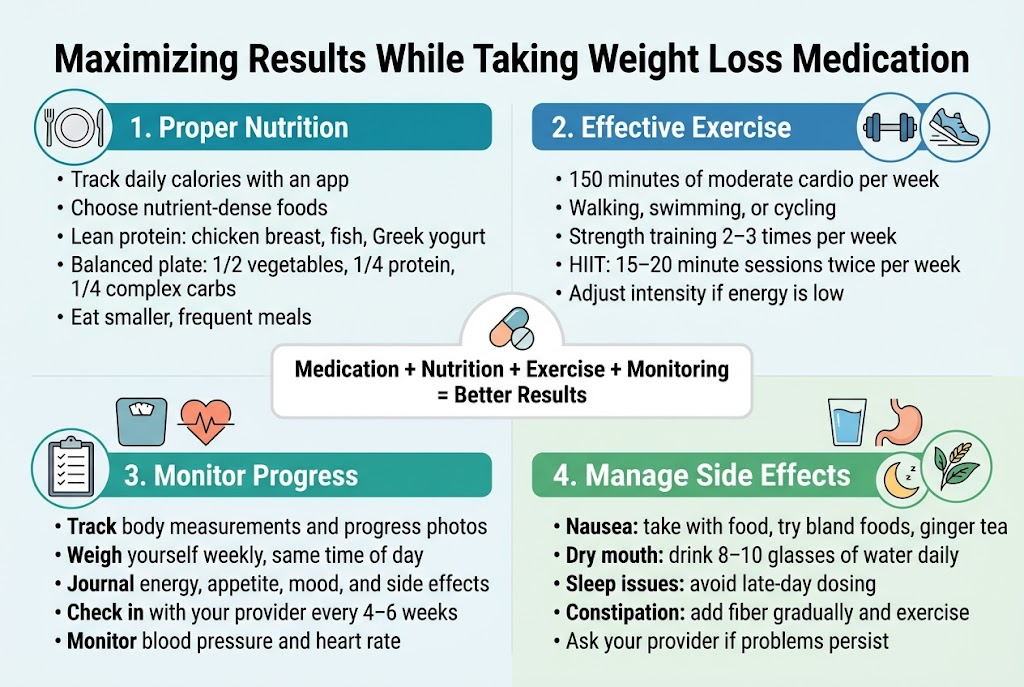
Weight loss medication works best when paired with a well-structured nutrition plan. Think of your prescription diet pills as a powerful tool that helps control hunger and cravings, but the fuel you put in your body determines the quality of results you’ll see.
Start by tracking your daily calorie intake using apps like MyFitnessPal or Cronometer. Most FDA approved weight loss drugs work by suppressing appetite, so you’ll naturally eat less. Take advantage of this by choosing nutrient-dense foods that pack maximum nutrition into fewer calories. Focus on lean proteins like chicken breast, fish, and Greek yogurt, which help maintain muscle mass during weight loss.
Create a balanced plate approach: fill half your plate with non-starchy vegetables, one quarter with lean protein, and one quarter with complex carbohydrates like quinoa or sweet potatoes. This strategy maximizes the appetite-suppressing effects of your obesity medication while keeping blood sugar stable.
Meal timing matters too. Many people find success eating smaller, frequent meals throughout the day when taking prescription weight loss pills. This approach prevents extreme hunger that might lead to overeating and helps maintain steady energy levels.
Incorporating Effective Exercise Routines
Exercise amplifies the effects of weight loss medication without surgery. Your reduced appetite from medication creates the perfect opportunity to build sustainable fitness habits without feeling constantly hungry or fatigued.
Start with 150 minutes of moderate-intensity cardio per week, spread across 5 days. Walking, swimming, or cycling work excellently for beginners. As your energy improves with weight loss, gradually add strength training 2-3 times per week. Building muscle tissue increases your metabolic rate, helping you burn more calories even at rest.
High-intensity interval training (HIIT) can be particularly effective when combined with non surgical weight loss medications. Short bursts of intense exercise followed by recovery periods maximize calorie burn both during and after your workout. Start with 15-20 minute sessions twice per week.
Listen to your body during the first few weeks of starting medication. Some people experience increased energy, while others may feel slightly fatigued as their body adjusts. Modify your exercise intensity accordingly, but maintain consistency.
Monitoring Progress and Adjusting Treatment
Successful medical weight loss programs require regular monitoring and adjustments. Track more than just the number on the scale – take body measurements, progress photos, and note improvements in energy levels, sleep quality, and overall well-being.
Weigh yourself weekly at the same time of day, preferably first thing in the morning. Weight can fluctuate daily due to water retention, hormones, and food intake, so weekly measurements provide a clearer picture of your progress.
Keep a detailed journal of how you feel on your weight management medication. Note energy levels, appetite changes, mood, and any side effects. This information helps your healthcare provider determine if dosage adjustments are needed or if switching to a different non invasive weight loss treatment might be beneficial.
Schedule regular check-ins with your healthcare provider every 4-6 weeks during the initial phase. They’ll monitor your blood pressure, heart rate, and overall health while adjusting your treatment plan based on your progress and any challenges you’re experiencing.
Managing Potential Side Effects
Most prescription diet pills come with potential side effects that can be effectively managed with the right strategies. Common side effects include nausea, dry mouth, constipation, and sleep disturbances.
For nausea, take your medication with food unless specifically instructed otherwise. Start with bland foods like toast or crackers, then gradually introduce more variety as your stomach adjusts. Ginger tea can provide natural nausea relief.
Dry mouth is easily managed by increasing water intake throughout the day. Aim for at least 8-10 glasses of water daily, which also supports weight loss and helps prevent constipation. Sugar-free gum or mints can stimulate saliva production.
If sleep becomes disrupted, avoid taking your medication late in the day. Most FDA approved weight loss drugs are stimulants that can interfere with sleep when taken too close to bedtime. Establish a calming evening routine with activities like reading or gentle stretching.
Constipation can be prevented by increasing fiber intake gradually through vegetables, fruits, and whole grains. Regular exercise also promotes healthy digestion. If problems persist, talk to your healthcare provider about gentle, over-the-counter solutions.
Long-Term Success Strategies
Transitioning to Maintenance Dosing
Once you’ve reached your target weight with weight loss medication, your doctor will typically adjust your prescription to a maintenance dose. This phase requires careful monitoring since your body’s needs change as you lose weight. Most FDA approved weight loss drugs have specific protocols for maintenance dosing that help you keep the weight off without unnecessary side effects.
The transition usually happens gradually over several weeks. Your healthcare provider will assess how well you’ve responded to the initial treatment and determine the lowest effective dose that maintains your weight loss. Some people can reduce their dosage significantly, while others may need to stay on a higher maintenance dose longer.
Regular check-ins with your medical weight loss program team become even more important during this phase. They’ll monitor your weight, blood work, and overall health to ensure the maintenance dose is working effectively. Don’t be surprised if you need dose adjustments during the first few months of maintenance – this is completely normal.
Building Sustainable Lifestyle Habits
Prescription weight loss pills work best when combined with lasting lifestyle changes. The medication gives you a window of opportunity to establish new habits while your appetite is suppressed and cravings are reduced. Smart people use this time to completely rewire their relationship with food.
Start by creating a structured eating schedule that works with your medication timing. Most obesity medication works better when taken consistently, so plan your meals and snacks accordingly. Focus on nutrient-dense foods that keep you satisfied longer – lean proteins, vegetables, whole grains, and healthy fats.
Exercise doesn’t have to be intense to be effective. Walking 30 minutes daily, taking stairs instead of elevators, or doing bodyweight exercises at home can maintain your metabolism and muscle mass. The key is finding activities you actually enjoy so you’ll stick with them after stopping the medication.
Sleep quality directly impacts weight maintenance. Poor sleep disrupts hormones that control hunger and satiety, making it harder to maintain your weight loss. Aim for 7-9 hours of quality sleep each night and create a consistent bedtime routine.
Preventing Weight Regain After Treatment
Weight regain is the biggest challenge people face after stopping weight management medication. Studies show that most people regain some weight within the first year, but you can minimize this with the right strategies.
Create a weight monitoring system that works for you. Some people prefer daily weigh-ins, while others find weekly or monthly checks less stressful. Set a specific weight range (usually 3-5 pounds above your goal weight) that triggers immediate action if you cross it.
Develop a rapid response plan for weight creep. This might include returning to stricter portion control, increasing exercise, or temporarily reducing calories. Having a plan ready prevents small gains from becoming major setbacks.
Stay connected with your healthcare team even after stopping medication. Many medical weight loss programs offer maintenance support that includes periodic check-ins, counseling, and access to resources. Some people benefit from intermittent courses of medication during high-risk periods like holidays or stressful life events.
Consider joining support groups or finding accountability partners who understand the challenges of weight maintenance. Online communities, local groups, or even apps that track habits can provide ongoing motivation and practical tips from others who’ve successfully maintained their weight loss.
Keep healthy foods easily accessible and remove tempting processed foods from your environment. Meal prep on weekends, stock your office with nutritious snacks, and learn to navigate restaurant menus confidently. These practical skills become automatic with practice and serve you well long after treatment ends.
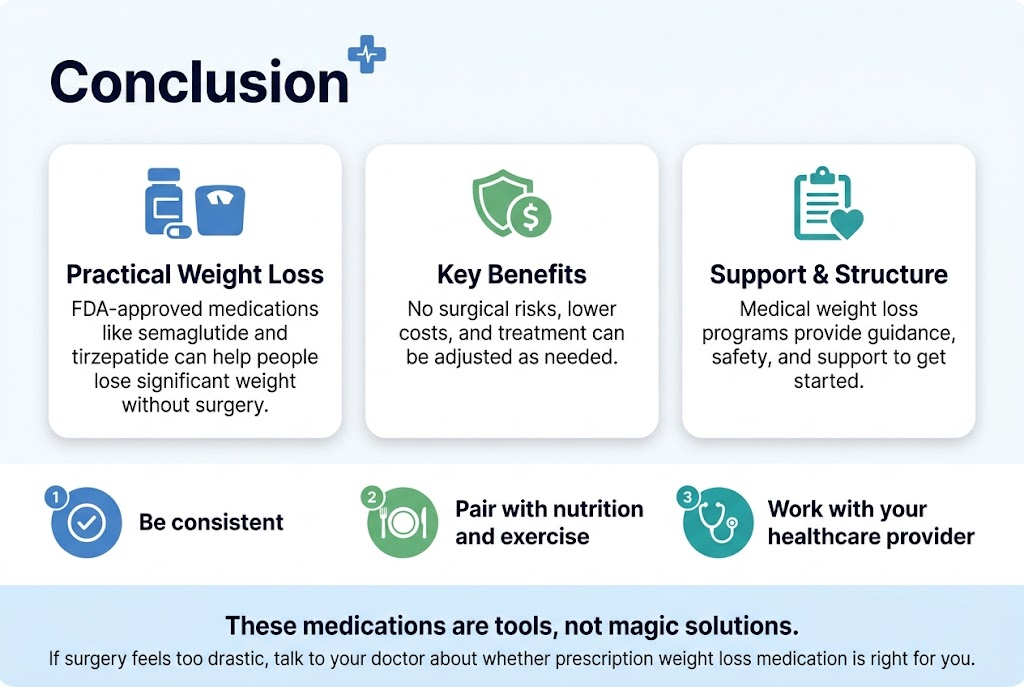
Weight loss medications offer a practical path forward for people who want to shed pounds without going under the knife. FDA-approved options like semaglutide and tirzepatide have shown real results, helping patients lose significant weight when combined with healthy lifestyle changes. The benefits are clear – no surgical risks, lower costs, and the flexibility to adjust treatment as needed. Medical weight loss programs provide the structure and support to get started safely.
Success with these medications comes down to consistency and realistic expectations. Work closely with your healthcare provider to find the right medication and dosage for your situation. Remember that these drugs work best when paired with proper nutrition and regular exercise – they’re tools to help you succeed, not magic solutions. If you’ve been struggling with weight loss and surgery feels too drastic, talk to your doctor about whether prescription weight loss medication might be the right step for you.